

Differences, types and how to choose them
Industrial surface preparation systems are machines used to clean, strip and roughen surfaces by projecting an abrasive at high speed. Tosca offers two ‘families’ of systems: shot blasting machines with centrifugal turbines and compressed-air sandblasters. For treating metal parts in series, shot blasting machines are almost always the most productive and cost-effective solution. This guide comes from Tosca Srl, which has designed and built industrial shot blasting machines and sandblasters in Canegrate (Milan, Italy) since 1967.In short:
- Shot blasting machine: throws metal shot with centrifugal turbines. Faster and cheaper to run on series production.
- Sandblaster: throws the abrasive with compressed air. Flexible, suited to special and delicate parts. The choice depends on the material the parts are made of, their shape, the volumes, the type of abrasive to be used and the required result.
What are sandblasting and shot blasting?
Sandblasting and shot blasting are two abrasive blasting surface treatments: both clean, strip and roughen the surface by striking it with abrasive particles thrown at high speed. What changes is how the abrasive is accelerated. In sandblasting, the abrasive is driven by compressed air; in shot blasting, by a centrifugal turbine.
Sandblasting: compressed-air blasting
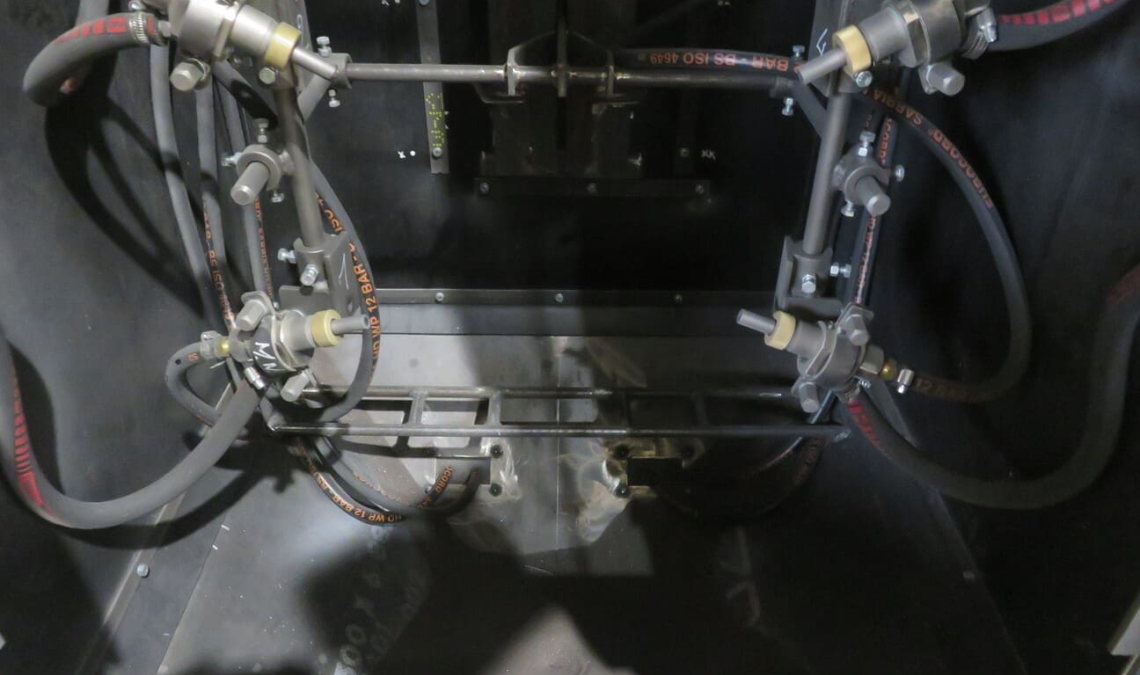
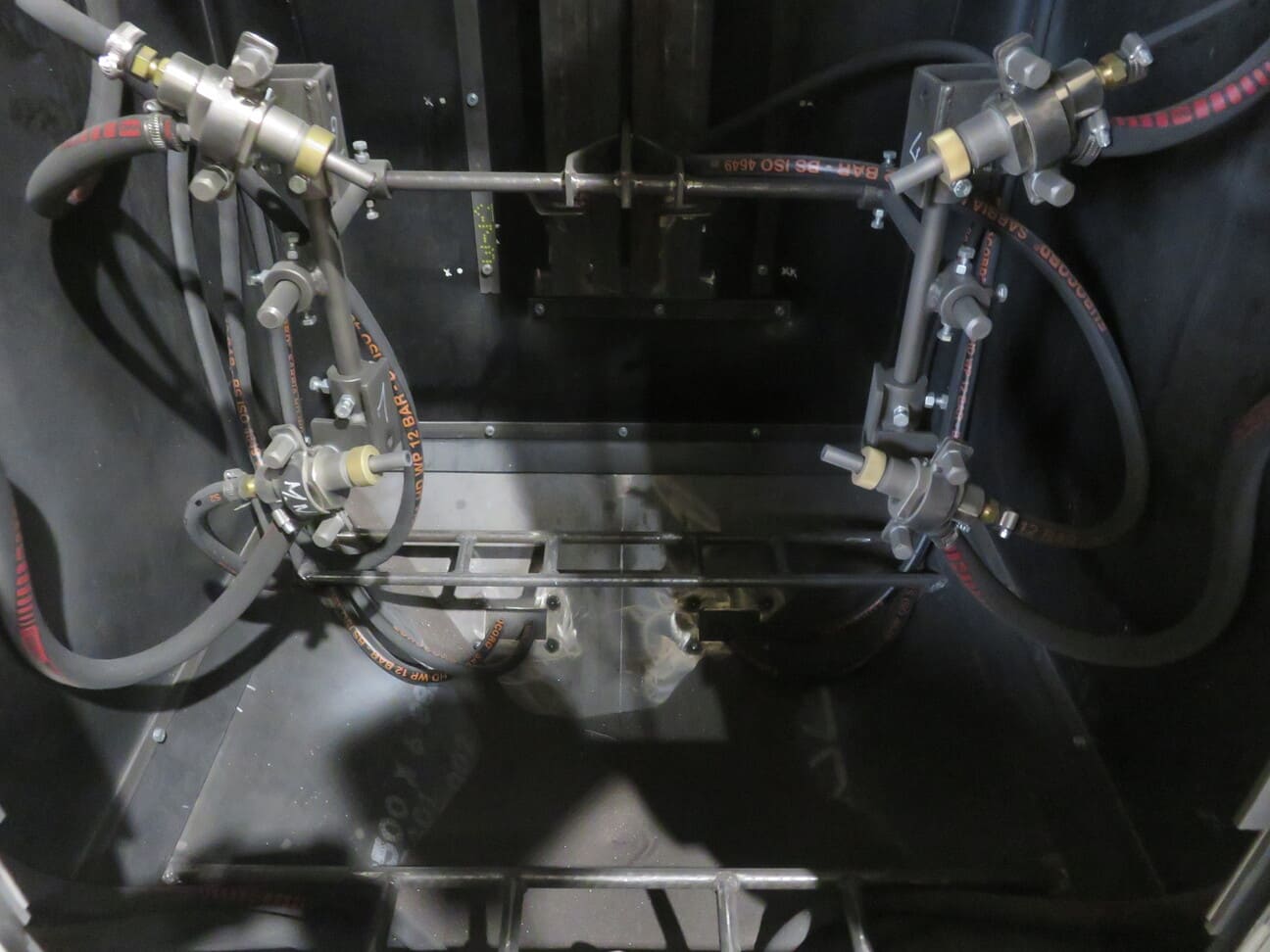
Sandblasting uses a compressor and a nozzle that mixes air and abrasive and directs it onto the part. The process can be manual or automated with fixed or robotic nozzles. The most common abrasives are corundum (aluminium oxide), glass beads, steel grit and organic or plastic media.
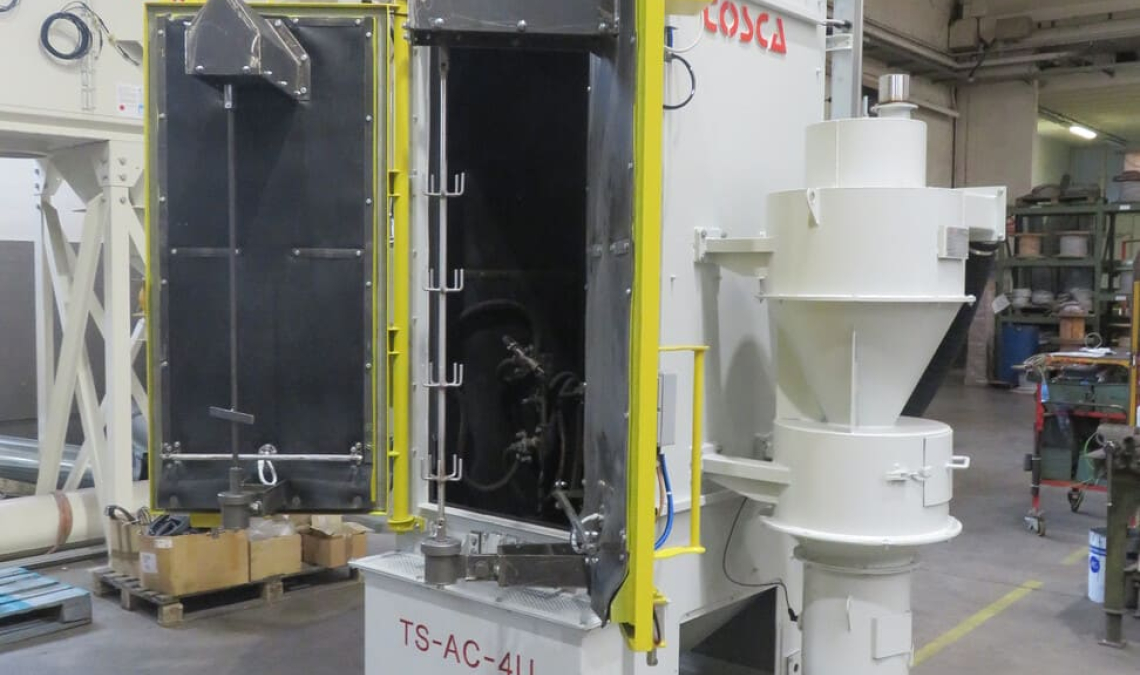
The choice depends on the desired finish and on how delicate the material is. Manual compressed-air sandblasting is suited to single parts, touch-ups, delicate surfaces and hard-to-reach areas such as internal cavities and undercuts. Automated sandblasting has to be engineered and built with special machines designed for the purpose. In this field, Tosca can bring real added value to the process.
Shot blasting: centrifugal turbine blasting
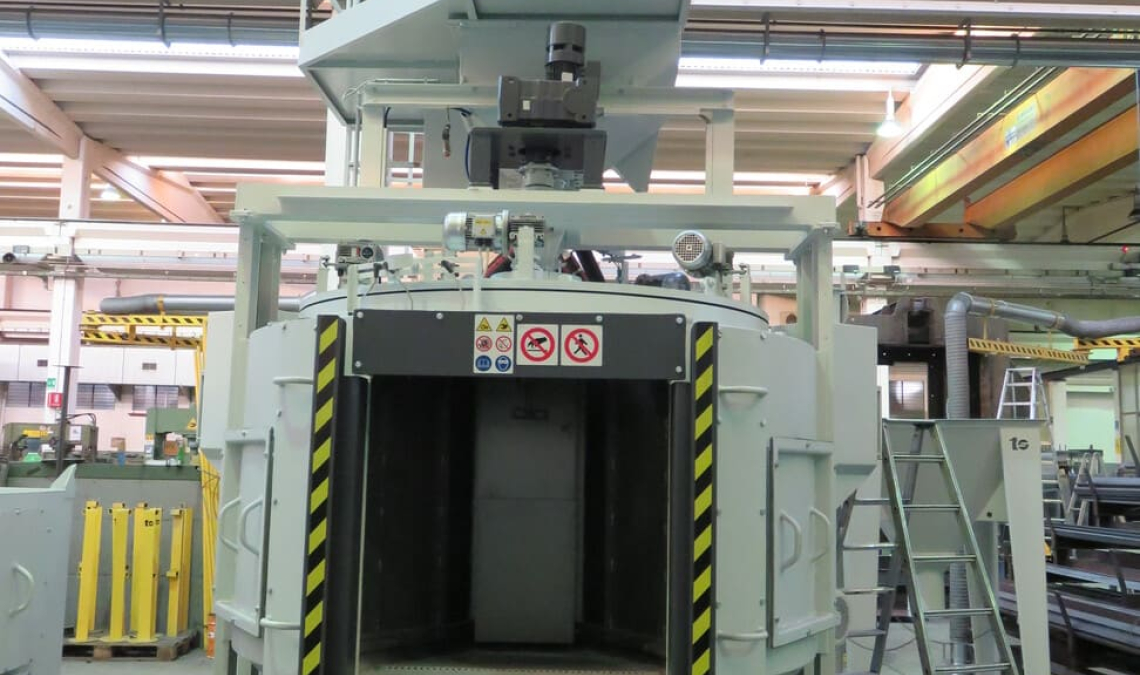
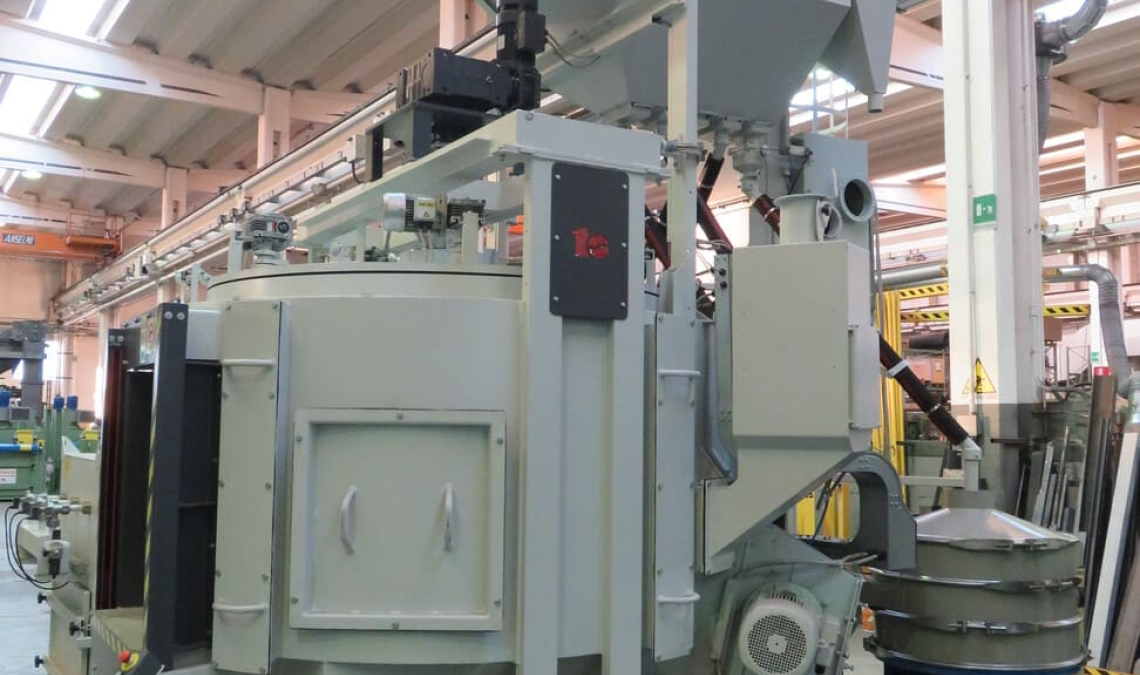
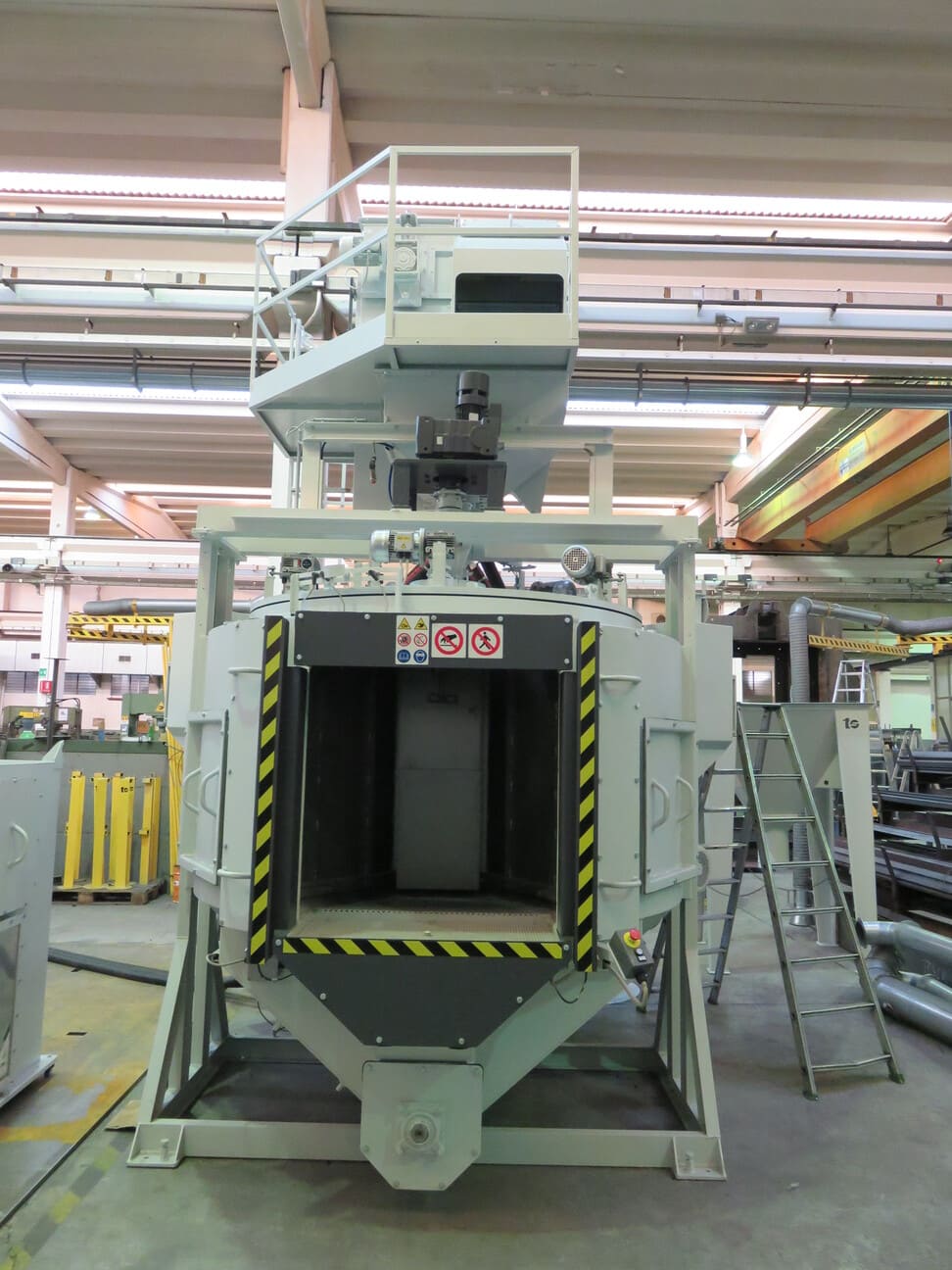
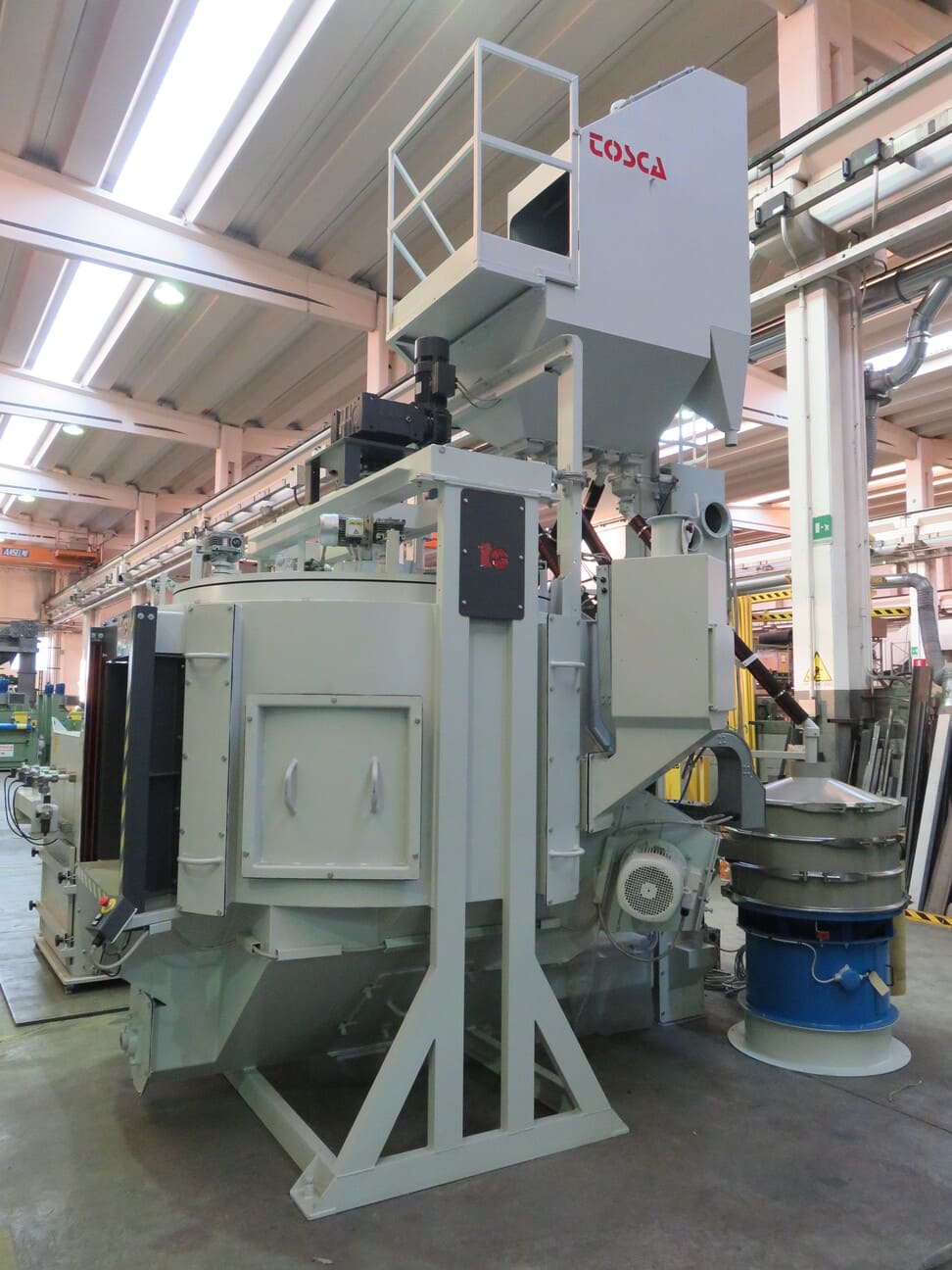
Shot blasting uses one or more turbines: a bladed wheel that, spinning at high speed, throws the metal abrasive onto the parts by centrifugal force. The abrasive can be spherical (shot) or angular (grit), and the materials can be steel, stainless steel or aluminium. A shot blasting system is a ‘closed’ system. The abrasive falls to the bottom of the chamber, is recovered, separated from dust and debris and sent back to the turbines. A filtration system captures the dust before the air is released back into the workplace. This continuous cycle makes it possible to treat large volumes of parts with repeatable results and low abrasive consumption.
Why a shot blasting machine is often called a “sandblaster”
In everyday language, “sandblaster” is often used to mean any surface treatment machine. That is why people searching for a “sandblaster”, “sandblasting machines” or “blasting machines” may actually need a shot blasting machine. Shot peening also belongs to this family: it is a particular form of shot blasting carried out with spherical shot, used to work-harden the surface of parts and give the metal specific mechanical properties.
What is the difference between sandblasting and shot blasting?
The main difference is the projection system: compressed air in sandblasting, centrifugal turbines in shot blasting. All other differences follow from this: shot blasting is more productive and costs less per square metre treated, while sandblasting is more flexible on special parts and complex geometries.
| Feature | Sandblaster (compressed air) | Shot blasting machine (turbines) |
| How it throws the abrasive | Nozzle fed by a compressor | Bladed centrifugal turbine |
| Abrasive | Corundum, glass beads, grit | Metal shot and grit in steel or aluminium |
| Productivity | Low to medium | High, for series production |
| Operating cost | Higher (compressed air) | Lower (recirculated abrasive) |
| Ideal part | Special, delicate parts made of special materials | Metal parts in general, produced by industrial processes |
Shot blasting includes descaling (removing scale and oxides from sheet metal and profiles) as well as shot peening (to be carried out only with spherical shot, to work-harden the surface of parts). In many companies the two systems work side by side: a shot blasting machine for series production, and a compressed-air blast cabinet for touch-ups and special parts.
What types of shot blasting and sandblasting systems are there?
These systems differ mainly in how the parts are conveyed and handled. This is what determines which type of system to use.
Hook (cluster) blasting machine
Parts are hung on a hook (individually or in clusters) and rotated in a closed chamber in front of the turbines. Batches of foundry castings, forgings and small, medium and large steel fabrications with complex shapes can be treated.
See the hook shot blasting machines; for heavy parts there are hoist and double hoist versions.
Monorail blasting machine with overhead conveyor
Hooks can travel past or stop in front of the turbines along an overhead track: loading and unloading take place outside the shot blasting chamber. It is a system for high production volumes, such as aluminium die-castings or automotive components. See the monorail shot blasting machines.
Compressed-air blast cabinets and systems
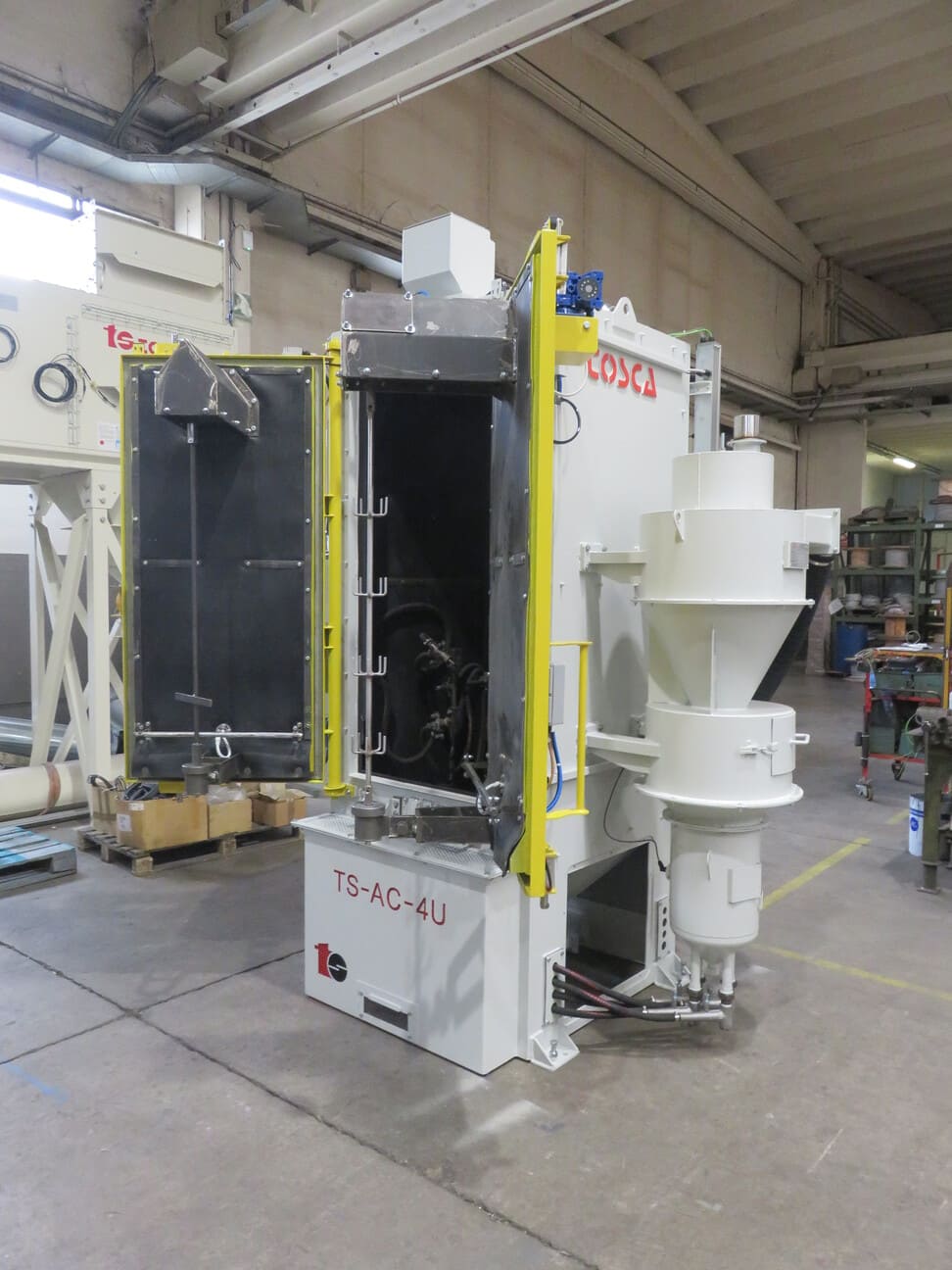
Air blast cabinets are used for special parts, delicate surfaces and touch-ups after shot blasting. Automated air blasting systems can also be used to focus the abrasive jet on cavities and hidden areas of the parts that turbines struggle to reach. They can be paired with a shot blasting machine: series production goes through the turbines, special cases through the nozzle.
Other systems of Tosca
- Roller: sheet metal, beams, profiles and bars in continuous mode, also in line with painting. For tubes: shotblasting machines for tube
- Conveyor belt, continuous drum and satellite table: small parts, forgings and heat-treated parts.;
- Special installations: for non-standard parts or production.
How to choose the right blasting system
Start from the part, not the machine. Four questions are enough to get oriented:
- What material do you treat? Steel and cast iron with steel shot; aluminium and light alloys with dedicated abrasives and parameters.
- What shape and weight are the parts? Flat and long on rollers; complex or heavy on hook or hoist; small parts on belt or drum.
- How many parts do you produce? Variable batches on hook; continuous production on monorail, rollers or drum.
- What finish do you need? For example Sa 2½ grade (ISO 8501-1) for painting preparation. Abrasive type and number of turbines depend on this..
Also consider the filtration system, sized for the dust and the working environment, and long-term operating costs: abrasive, energy, spare parts.
Quick decision guide
| Feature | Sandblaster (compressed air) | Shot blasting machine (turbines) |
| How it throws the abrasive | Nozzle fed by a compressor | Bladed centrifugal turbine |
| Abrasive | Corundum, glass beads, grit | Steel or aluminium metal shot |
| Productivity | Low to medium | High, for series production |
| Operating cost | Higher (compressed air) | Lower (recirculated abrasive) |
| Ideal part | Special, delicate parts made of special materials | Metal parts in general, produced by industrial processes |
Which industries use them?
Cast iron foundry and steel foundry, aluminium die-casting, hot and cold press forging, structural steelwork, sheets, pipes and profiles, heat treatment and concrete, natural and agglomerate stones.
Why choose an Italian manufacturer like Tosca?
Among sandblasting machine manufacturers, those who design and build in-house control quality, lead times and future modifications. Tosca has handled sandblasting machine production and shot blasting machine manufacturing in-house since 1967, with more than 6,000 systems installed worldwide.
- Projects on specific requirements, designed around the customer’s parts and line.
- Spare parts in stock and SBT Service technical support from Italy.
- Used and overhauled machines for tighter budgets.
Frequently asked questions
Is a shot blasting machine a sandblaster?
Yes, in everyday language. A shot blasting machine is a type of industrial sandblaster that uses centrifugal turbines and steel shot instead of compressed air. It is the most widespread solution for treating metal parts in series.
What is the difference between a sandblaster and a shot blasting machine?
A sandblaster throws the abrasive with compressed air; a shot blasting machine uses turbines. The first is more flexible on one-off and delicate parts, the second is faster and cheaper on series production.
What is a hook blasting machine?
Yes, especially die-castings. It requires suitable abrasives (for example stainless steel shot) and controlled speeds to avoid contamination and deformation.
Can aluminium be shot blasted?
Yes, especially die-castings. It requires suitable abrasives (for example stainless steel shot) and controlled speeds to avoid contamination and deformation.
How much does an industrial sandblasting machine cost?
It depends on the type, chamber size, number of turbines, filtration and automation. A reliable estimate requires a quote based on real parts and volumes.